The nearest midsized black hole might instead be a horde of lightweights

A bright concentration of stars on a dark sky.

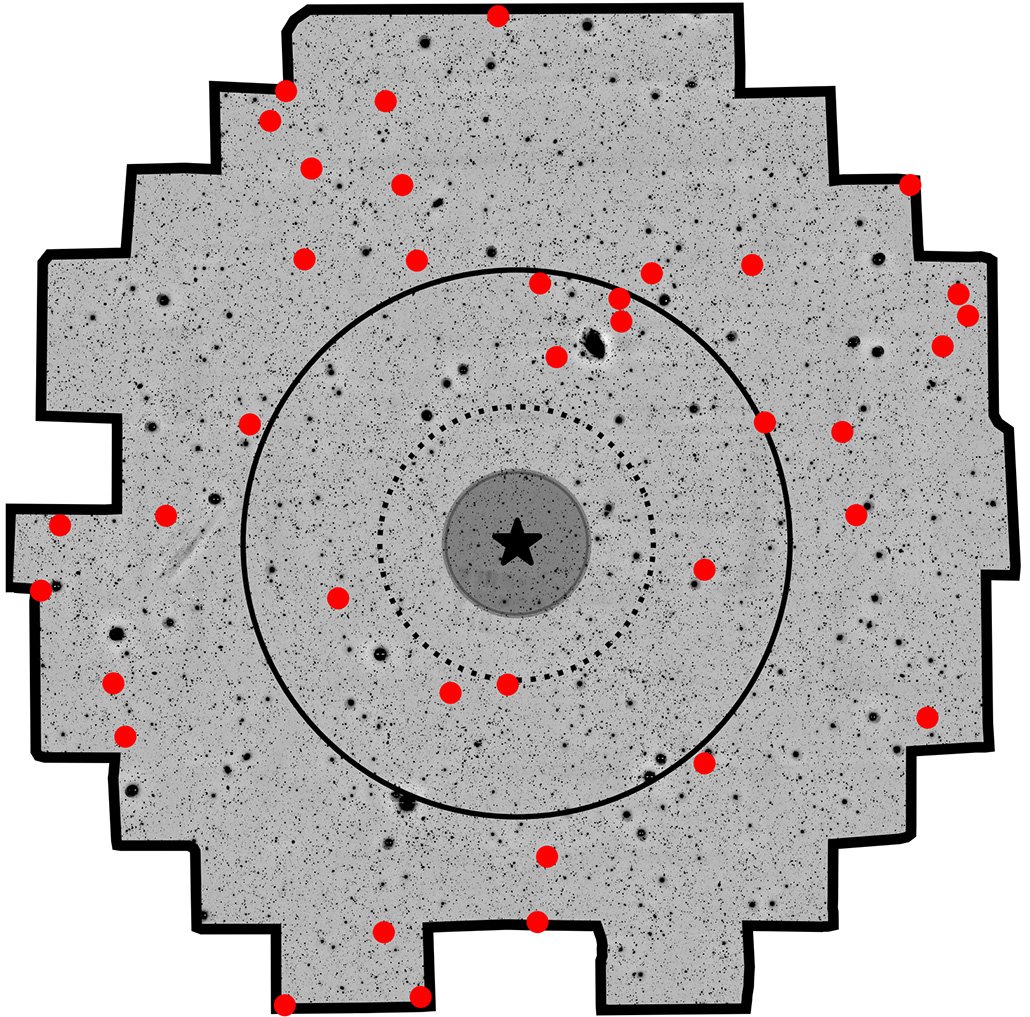
Contrary to a previous report, there’s no evidence of an intermediate-mass black hole in Omega Centauri, the Milky Way’s most massive and luminous globular star cluster, a new study finds. Instead, a hive of much smaller black holes diving into and out of the tightly packed star cluster’s center can explain the movement and distribution … Read more

Zapping sand to create rock could help curb coastal erosion

Debris from a collapsed house litters a beach in North Carolina. In the distance, a house on stilts still stands at the very edge of the ocean.

Shorelines worldwide have always been vulnerable to coastal erosion, a phenomenon rendered more ominous by rising sea levels that accompany modern-day climate change (SN: 9/29/22). Coastal engineers have few ways to address this erosion, says Alessandro Rotta Loria, a civil engineer at Northwestern University in Evanston, Ill. One method is to build a seawall; another … Read more

The historic ‘Wow!’ signal may finally have a source. Sorry, it’s not aliens

A piece of paper with strings of numbers and letters printed on it, with one line circled in red pen and "Wow!" written in that same pen in the margin

One of the most compelling potential signs of extraterrestrial communication might have an astrophysical explanation. Called the “Wow!” signal, the bright burst of radio waves has defied our understanding since its discovery in the 1970s. Now, scientists using archived data from the Arecibo Observatory in Puerto Rico suggest a new possible source for the signal: … Read more

The world’s fastest microscope makes its debut

This illustration of a sheet of graphene shows a grid of connected atoms with a red streak going diagonally across it.

The motion of whizzing electrons has been captured like never before. Researchers have developed a laser-based microscope that snaps images at attosecond — or a billionth of a billionth of a second — speed. Dubbed “attomicroscopy,” the technique can capture the zippy motion of electrons inside a molecule with much greater precision than previously possible, … Read more